 Search

Weight gain in the first few weeks
Babies will usually loose weight in the first few days after they are born. This is normal. They usually start to gain some weight each week and slowly reach their birth weight again after 2 to 3 weeks when breastfeeding.
They should still look like they fit their skin (their skin is not loose and wrinkly).
If you are worried about your baby’s weight gain, ask for advice from your maternal, child and family health nurse or family doctor.
How to know if your baby is getting enough breast milk
Since you cannot see how much breast milk your baby drinks, you may worry they are not getting enough, or you are not making enough. Most mothers can make enough milk for their baby (or babies). The amount of milk you make depends on how much and how often you breastfeed your baby.
Signs your baby is getting enough milk
Wet nappies
babies should have about 6 to 8 wet nappies in 24 hours. Nappies should feel heavy and clear in colour.
Poos
baby’s poo about 1 to 3 times a day or sometimes every 1 to 2 days. Their poo should be soft or runny and usually yellow/greenish or brown in colour. If your baby’s poo is hard and looks like little pebbles, your baby cries or seems in pain when doing a poo, or you see blood in their poo, talk to your maternal, child and family health nurse or family doctor.
Skin
your baby's skin should have a healthy colour. If you gently press down anywhere on their skin it should come back up straight away.
Alertness
when your baby is awake, they are watching, listening, and noticing what is happening around them.
Growth
your baby should be gaining weight, growing taller and their head should get larger. Every time you visit your maternal, child and family health nurse or family doctor ask them to help you measure, weigh, monitor and record your baby's growth in your baby’s Personal Health Record book.
What to do if you are worried about your breastmilk supply
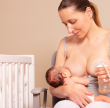
Check your baby’s latch: If breastfeeding hurts, your baby may not be attached properly. When your baby is attached well, they can suck and get milk more easily.
Only give breastmilk: At this age, your baby only needs breastmilk, unless a health professional says otherwise. Giving other foods or drinks can make your baby less hungry and feed less at the breast.
Look after yourself: Feeling stressed can affect how much milk your body makes. Find ways to relax before breastfeeding, like doing a quick breathing exercise, or finding a quiet space. Ask for help from family, friends, or professionals. All baby needs is you, so take care of yourself.
Eat and drink well: Eat a variety of healthy foods each day. Drink about 8–10 cups of water to help your body make milk.
Tips to help you make more breastmilk
The more you breastfeed your baby the more milk you will make. It takes about 4 to 6 weeks for your body to learn how much milk to make. When your baby is around 6 weeks old, your breasts may feel softer and back to normal. This means your body knows how to make the right amount of milk. It does not mean you have a low milk supply.
Your baby is attached well to your breast.
You feed your baby whenever they show signs they are hungry. This can be 8 to 12 times in 24 hours, during the day and overnight.
To feed your baby through the night. This is when your milk making hormone (prolactin) is higher.
To feed your baby from one breast until it is empty and feels soft. If your baby is still hungry after your first breast is soft and empty, you can feed them from the other breast. The next time you feed them, start with the breast you used last.
To try different breastfeeding positions.
To rest or sleep when your baby sleeps.
You drink enough water. Aim for 2-3 Liters of water a day.
Avoid nicotine (such as from cigarettes or vapes). Nicotine can affect your breastmilk supply.
Give your baby only breast milk in the first 6 months unless your doctor tells you otherwise. Giving your baby food or fluids other than breastmilk (e.g. infant formula or water) may lower your milk supply.
If you are worried about your milk supply, talk to your child and family health nurse or family doctor.
The size of your baby
Sometimes people believe a bigger baby means they are healthier, but that is not always true. The health of a baby depends on many things like nutrition, genetics and overall well-being, not just their size.
Every baby is different and grows at their own pace. What really matters is that your baby is growing and developing as expected. Focus on giving your baby a healthy diet, going to regular check-ups with your family doctor, and following their advice for your baby's health and well-being. Remember, the size of your baby doesn't show how healthy they are.