 Хайлт
Хайлт

On this page:
Try to feed your baby different foods from the 5 food groups every day. Some of these foods come in packages. Use this guide to learn how to read food labels and pick healthy foods for your baby.
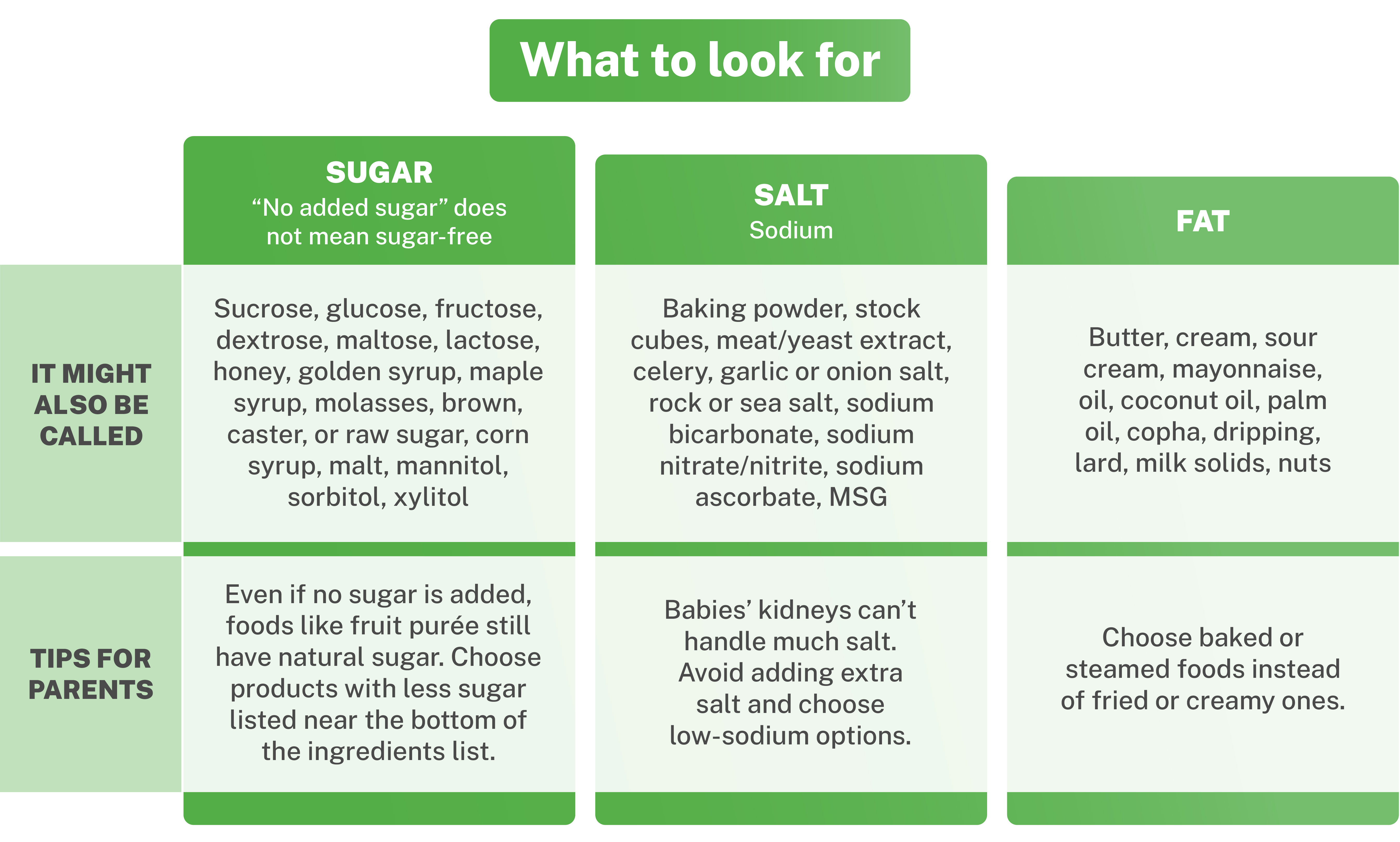
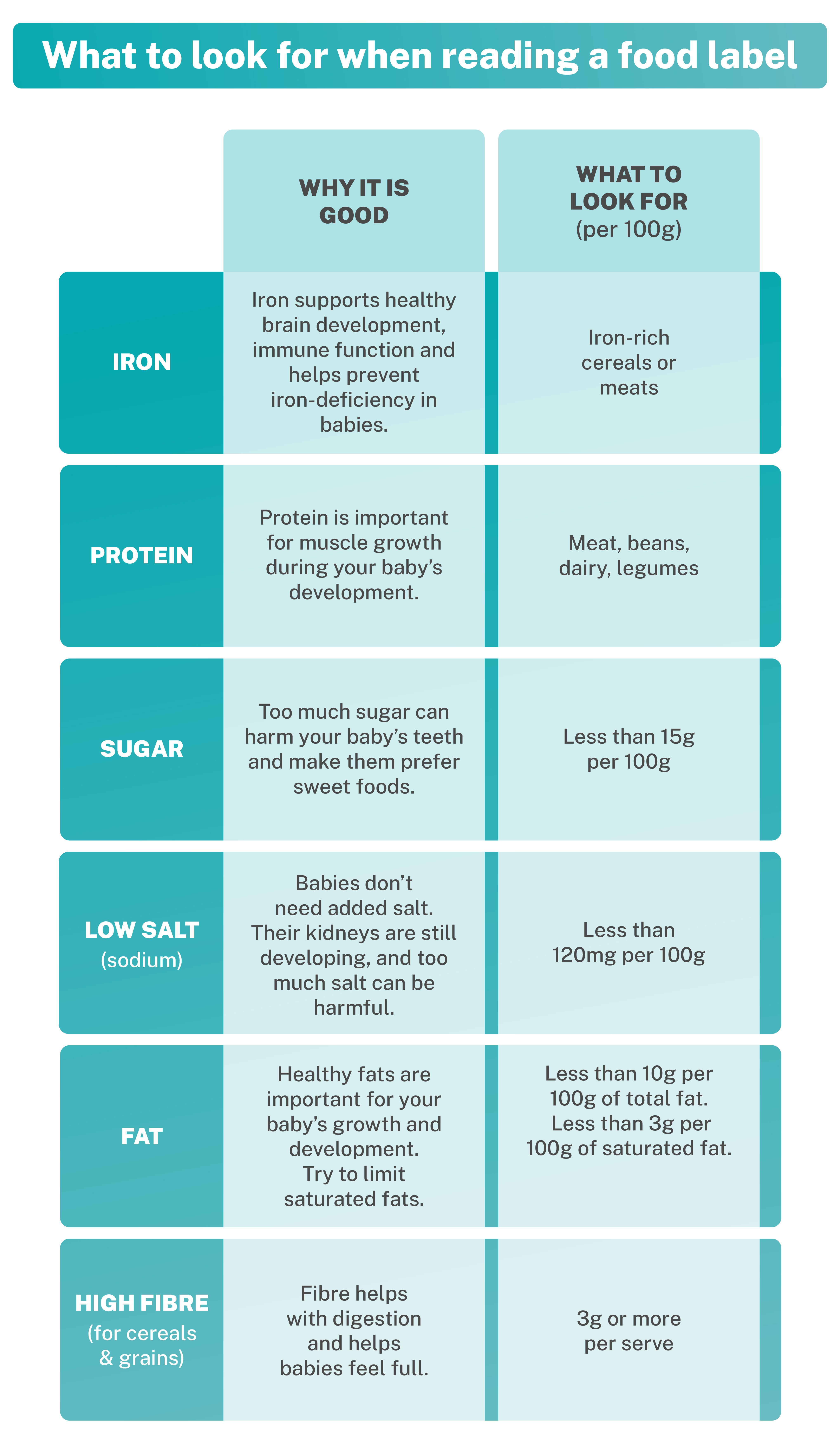
What to look for
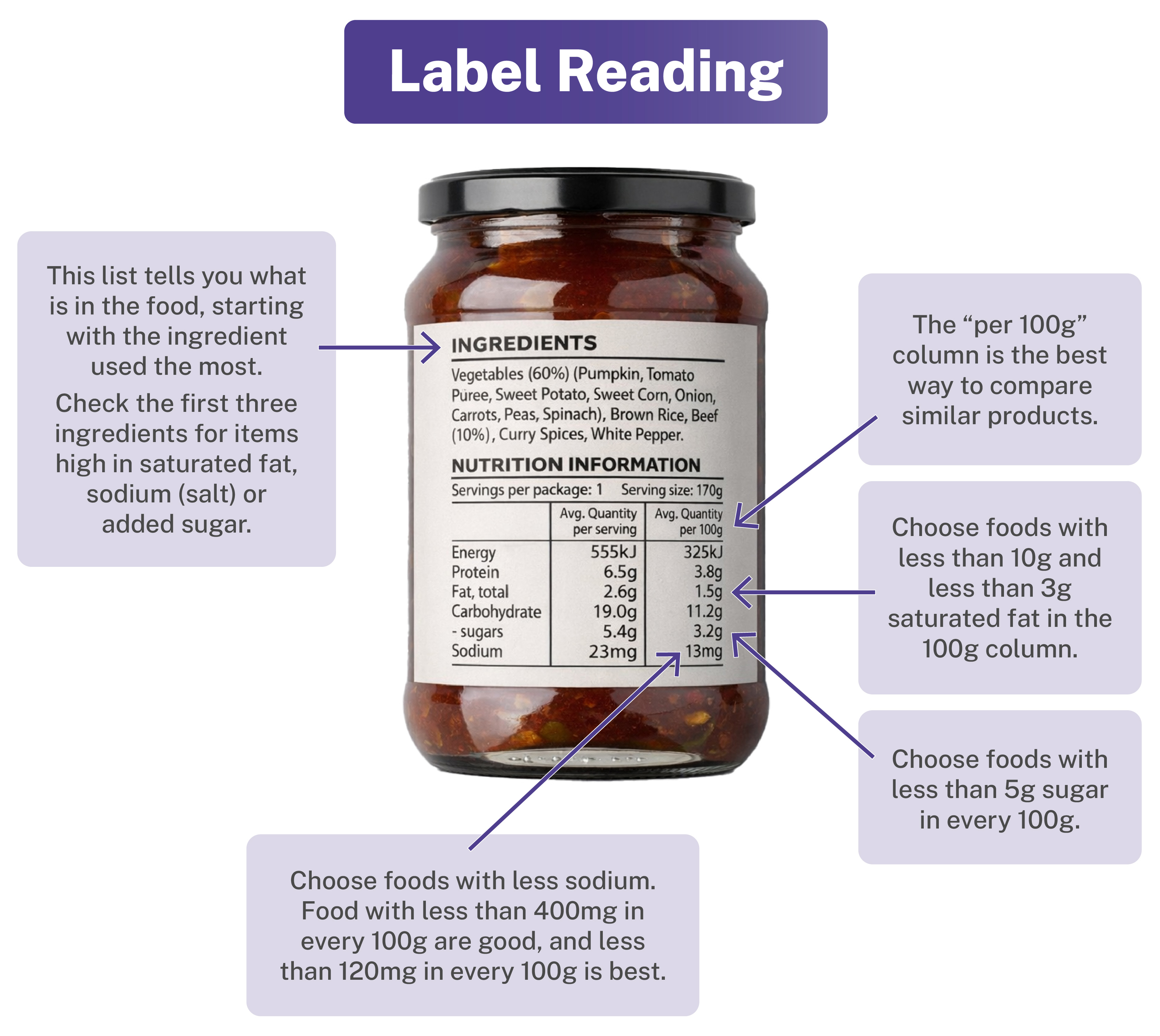
Ingredients List
The ingredients list shows what is in the food, starting with the largest amount.
Look for foods like vegetables, fruits, grains, or meat as one of the first ingredients.
Try to avoid added sugar and salt.
Nutrition Information Panel
The nutrition information panel tells you how much energy, fat, sugar, and salt are in the food.
Use the “per 100g” column to compare different products.
Less sugar and salt are better.
Allergy Information
Lists common allergens like milk, egg, wheat, or soy.
Important if your baby has allergies.
It is also important to feed your baby the common allergy causing foods before one year of age to help prevent food allergies. Read more about how to give common allergy causing foods to your baby
Words like “organic” or “natural” does not always mean it is healthy. Always check the label at the back of the package
What is the Health Star Rating?
The Health Star Rating is a quick and easy way to compare packaged foods in the same category. For example, comparing different breakfast cereals, yoghurts, or snacks.
It shows stars on the front of the package, usually from ½ a star to 5 stars. The more stars, the healthier the food is in that group. Look for 4 stars or more.
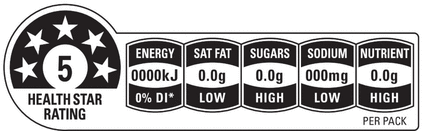
How to use the Health Star Rating when shopping
Compare similar products only. For example, compare yogurts with yogurts, or breakfast cereals with breakfast cereals. Do not compare yogurt with muesli bars.
The Health Star rating is just a guide, but the nutrition label and ingredients list gives you more information about what's in the product. Sometimes a product can have a high star rating but still contain added sugar or salt.
Food safety tips
Here are some important things to look out for when reading food labels and preparing foods at home
- Honey (even “raw” or “organic” honey) should never be given to babies younger than 12 months.
- Babies are still learning to chew and swallow safely. To keep them safe, do not give foods that are:
- Round and hard (like whole grapes or cherry tomatoes)
- Hard or crunchy (like raw carrots, nuts, or popcorn)
Sticky (like a big spoon of peanut butter or marshmallows)
What to do instead:
- Cut food into small, soft pieces.
- Always stay with your baby while they eat.
- Always look at the label on the food package.
- Use by date: Do not eat food after this date. It can make you or your baby sick.
Best before date: The food may not taste as good after this date, but it is usually safe if you store it properly.
After opening:
- Follow the instructions on the label. For example: “Keep it in the fridge after opening.”
- Throw away any food that has been left out of the fridge for more than 2 hours.