

 Search


On this page:
Is your baby teething?
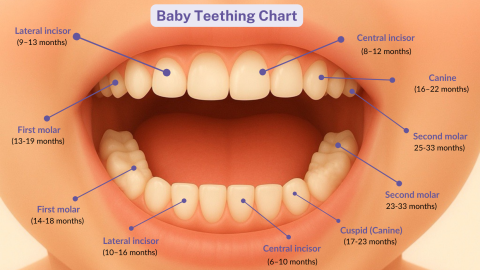
Babies can start teething from 3 months to 2 years of age. It is important to start cleaning and brushing their teeth as soon as they show to stop any tooth decay from happening.
During this time your baby may be upset, drool more than usual and chew a lot.
It may help to give your child something to bite on, like a teething toy, a cold wet face cloth or a sugar-free rusk (cereal biscuit).
Dummy or Pacifier can help calm teething babies. Never put a dummy or pacifier in sweet stuff like honey or jam because it can cause tooth decay.
❌Do not use teething gels / teething medication because they probably don't help with pain and can have harmful side effects.
❌Amber beads or necklaces/ bracelets with beads can choke your baby and don't help with teething pain.
Cleaning Teeth
When your baby's first tooth starts to come through, you can use a soft toothbrush and water only to clean your baby's teeth after food. Do not use wash cloths or finger brushes to clean teeth as they are not as good as a soft baby toothbrush.
You can also read Looking after your baby’s teeth article.
Tips to keep your baby’s teeth and gums healthy
- Put your baby to bed without a bottle.
- Stop using a bottle when your baby is around 12 months old.
- Start giving your baby a cup for drinking water when they are around 6 months old. Use cooled boiled tap water until they reach 12 months of age.
- Begin brushing your baby's teeth once their first tooth appears.
- Use only water on their toothbrush until they reach 18 months of age.
- After 18 months, you can start using a low fluoride toothpaste.
When to visit the dentist
Take your baby to the dentist for the first time when their first tooth comes in or when they turn 12 months old, whichever happens first.
After 12 months:
Breastfeeding and bottle feeding
If you are breastfeeding, try to only feed your baby at the breast when they are hungry. Breastfeeding on demand or letting them suck for comfort many times a day or night can cause dental cavities (holes in teeth). This happens because the new teeth stay covered in milk for a long time.
The same thing can happen with bottle feeding. If your child goes to sleep with a bottle of milk, or drinks milk during the night, the milk stays on their teeth for hours without being cleaned off. This can also lead to holes in the teeth.