 Search

Healthy Mealtime Habits
You can help your children learn to enjoy meals and behave well starting now. This will make them happy eaters for life and prevent picky or fussy eating behaviours.
Enjoy mealtimes
- Eat together when you can
- Talk to your baby during meals, for example ‘we have green broccoli and white beans for lunch’
- If your baby throws food, you can offer more 1-2 times. If they throw food more than 2-3 times, remove the food and calmly say ‘ it looks like you are all done’
- Turn off the television and put away devices and toys during mealtimes.
Create a feeding routine
- Give your baby different healthy foods to try. This will help your baby get used to new tastes and textures.
- Give soft and smooth foods first. Slowly try lumpier foods when your baby can handle them.
- Choose where and when your baby eats.
- To help your baby eat safely, put them in a highchair with a footrest or sitting upright in another safe place.
- When you start solids, at around 6 months, give your baby food 1-2 times a day. Over the next few days, increase the number of times you offer food.
- By 7 months, you can offer our baby 3 meals a day, that is, breakfast, lunch and dinner
- Keep giving breastmilk or formula before solid food until your baby is around 9 months. After 9 months, you can give food first, then milk.
Let your child decide how much food to eat
- After you give your child a meal, let them choose which foods to eat and how much.
- Do not offer other foods if they do not eat their meal.
- Do not pressure, force, or bribe your child to eat. For example, do not say ‘one more bite’ or ‘if you eat your meal you can go outside and play’
- Do not reward with food. For example, do not say ‘eat your vegetables and you will get dessert’ or ‘if you behave well you can have an ice-cream’. This can make children more interested in the reward foods and make eating emotional.
Be a positive role model
- Model eating by show your child that you eat and enjoy a variety of healthy foods
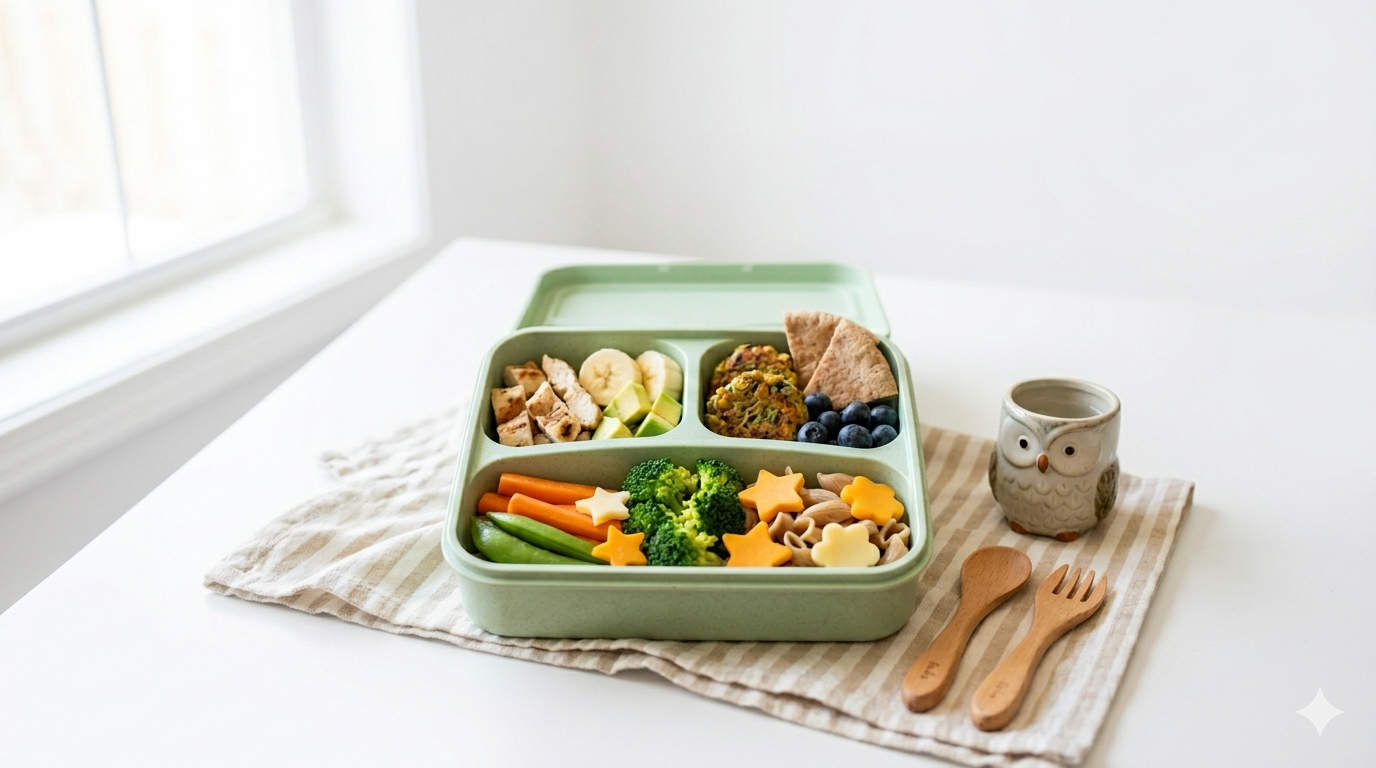
- When you can, serve the similar food to the whole family. You can adapt meals by making small changes, like using less spice or salt, and cutting foods into safe shapes or different textures to prevent choking
- Talk about the colour, texture and taste of food, like saying ‘soft orange carrots’
- Do not use words like ‘good’, ‘bad’, ‘treat’, ‘naughty’, ‘junk’ to describe food.
Keep trying
- It can take 10 or more times for a child to accept a new food. You only need to give a small amount of the new food to begin with
- Try not to react if a child rejects or does not want a food. You can say ‘That’s okay, you don’t have to eat it today’
- Give your baby 1 new food at a time with a food they like.
- Cook or prepare foods using different methods, for example, steam and bake sweet potato
Offer child-size amounts of food
- Give small amounts of food to start and offer more if still hungry
- A big plate of food can be too much or overwhelm children.
Involve children
- Children are more likely to try food they have explored or played with it in some way
- Let your child smell and touch food without making them eat it.
- Let your child feed themselves – it’s okay if they make a mess
Last updated: 20 Jul, 2026 - 02:33