 Search

Feeding your baby solid foods is an exciting time. Every baby is different, so it is important you continue to follow their signs and interest in food to help them learn new skills for eating.
Milk is their main food at this age. Solid food should not replace breastmilk or formula milk.
- Pick a time when your baby is awake, happy and not too hungry or tired. This is often after a milk feed.
- Start with a small amount of food. At first, your baby might only eat 1 to 2 teaspoons or less.
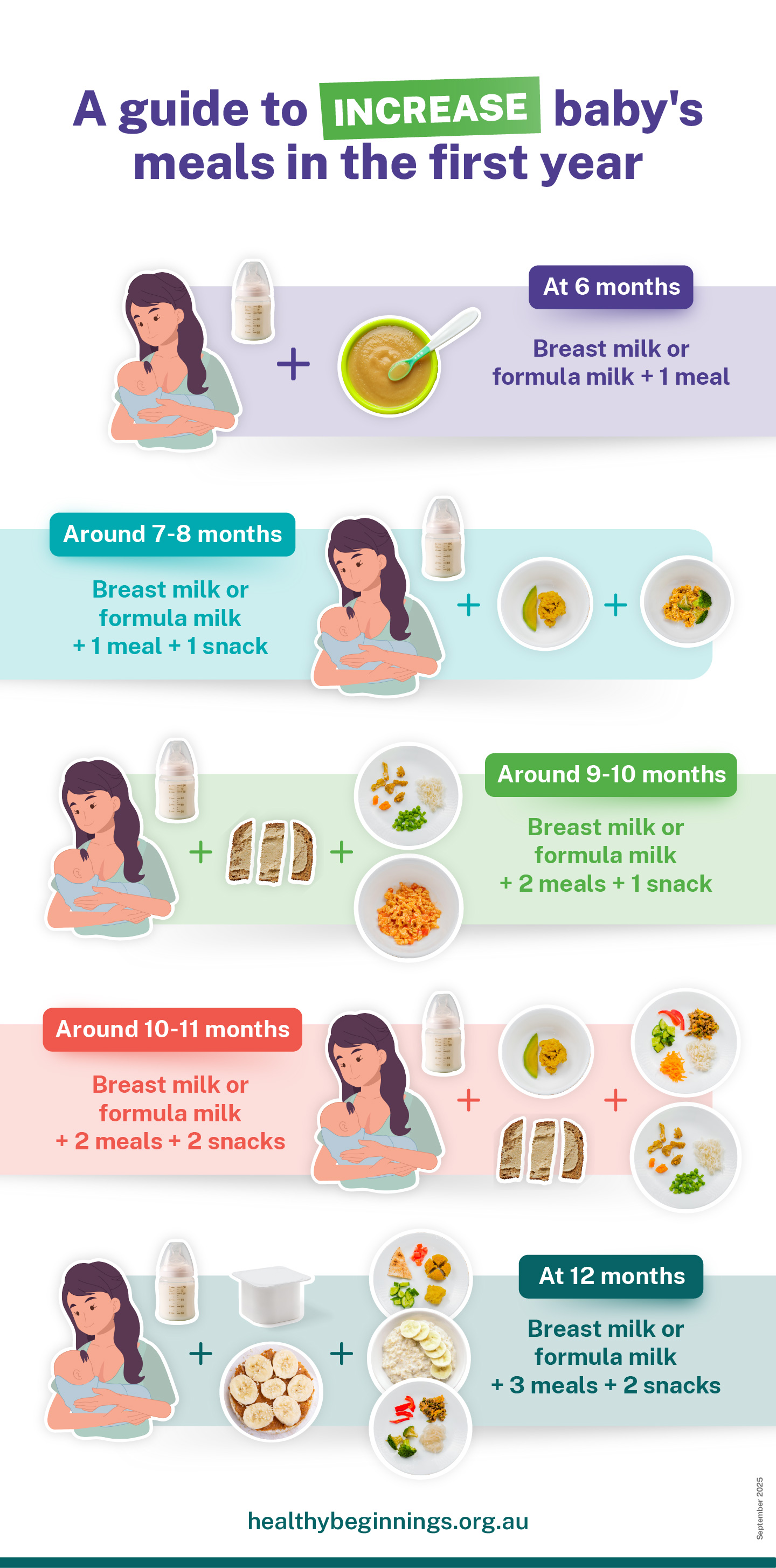
- Increase the number of meals as your baby starts eating more (about 2 to 3 tablespoons at a time).
- Let your baby decide how much they eat. Look for their fullness signals or cues, like turning away or closing their mouth when full.
Responsive feeding
Being responsive to your baby’s signs of hunger and being full (satisfied) is an important part of feeding.
Signs your baby is full
- Turning their head or looking away.
- Pushing food out of their mouth.
- Closing their mouth when you give them food.
- Shaking their head no.
- They start eating more slowly.
Signs your baby is hungry
- Getting excited and making noises when they see you with food.
- Putting their hands in their mouth.
- Grabbing or leaning towards you when you have food.
- Opening their mouth as you feed them.
Your beliefs about food
When feeding your baby, it is helpful to respond to your baby’s signs, but also consider what is happening to you. Your beliefs and values about health and nutrition matter because babies learn from watching you. They pay attention to the foods you choose and how you feel about them. Your relationship with food can influence your baby's relationship with food too.
You are your baby's food role model. Enjoy mealtimes together. Eating healthy foods with your baby will teach them about healthy eating.
If you have any questions, speak to your child and family health nurse or family doctor.
Learning through food
Babies learn to chew, swallow, accept different tastes and enjoy eating by being with their family.
- Encourage self-feeding by letting your baby use their hands and give them a plastic or silicone spoon to feed themselves.
- Your baby might need to try a new food around 10 to 15 times before they start to like and enjoy its taste.
- Prepare for mess during mealtimes – it is part of how your baby learns to handle and enjoy food.
- Wait until after they have finished eating to clean their face.
Feeding from a cup
At 6 months, you can give your baby water from a cup instead of a bottle.
Do not give your baby soft drink, fruit juice or any other sugary drinks. These can cause tooth decay or cavities and make your baby less hungry for healthy foods.
The only drinks your baby needs are water and breast milk or formula.
Safety when feeding your baby
- Always be with your baby while they are eating to make sure they are safe and not choking.
- Use a safety harness (strap or seatbelt) in a high chair to keep your baby secure while eating.
Foods to avoid feeding your baby
- Honey
- Raw or uncooked eggs and foods containing raw eggs like home-made mayonnaise
- Lollies, chocolate, chips and popcorn
- Sausages and hot dogs
- Whole nuts
- Hard foods like raw apples
- Round foods like whole grapes
- Fish with bones