 Search

Best foods to start with
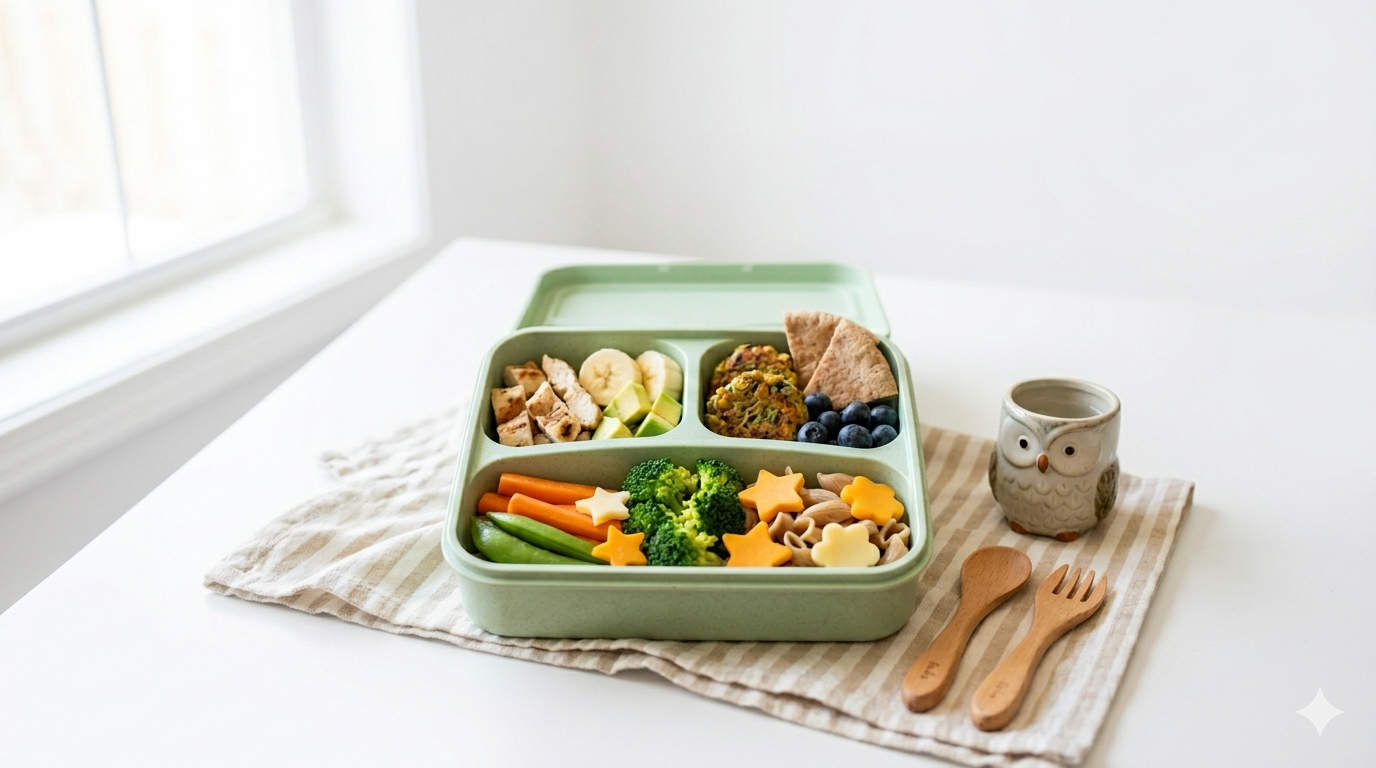
When your baby is around 6 months old, give them pureed, mashed, or very soft finger foods from the five food groups. These foods have extra energy and nutrients, such as iron and zinc that help them grow. First foods can be given in any order, as long as you include iron-rich foods.
Iron-rich foods:
- meat (beef, lamb, chicken)
- fish
- legumes (beans, lentils, chickpeas)
- iron-enriched rice cereal
- eggs (well cooked)
- tofu and tempeh
- green leafy vegetables
Variety: along with iron-rich foods, add other foods such as:
- cooked vegetables (such as pumpkin, carrot and potato)
- cooked or soft fruit (such as apple, melon and banana)
- grains (such as rice, quinoa and Weet-Bix)
- full-fat dairy products such as cheese or yoghurt.
Cultural preferences: each family's cultural foods and practices are important, and it is okay to include these into your baby's diet.
Textures: slowly give your baby different types of food with different tastes, textures, and amounts. Babies need to try different textures to learn new skills, like how to chew, swallow, and talk.
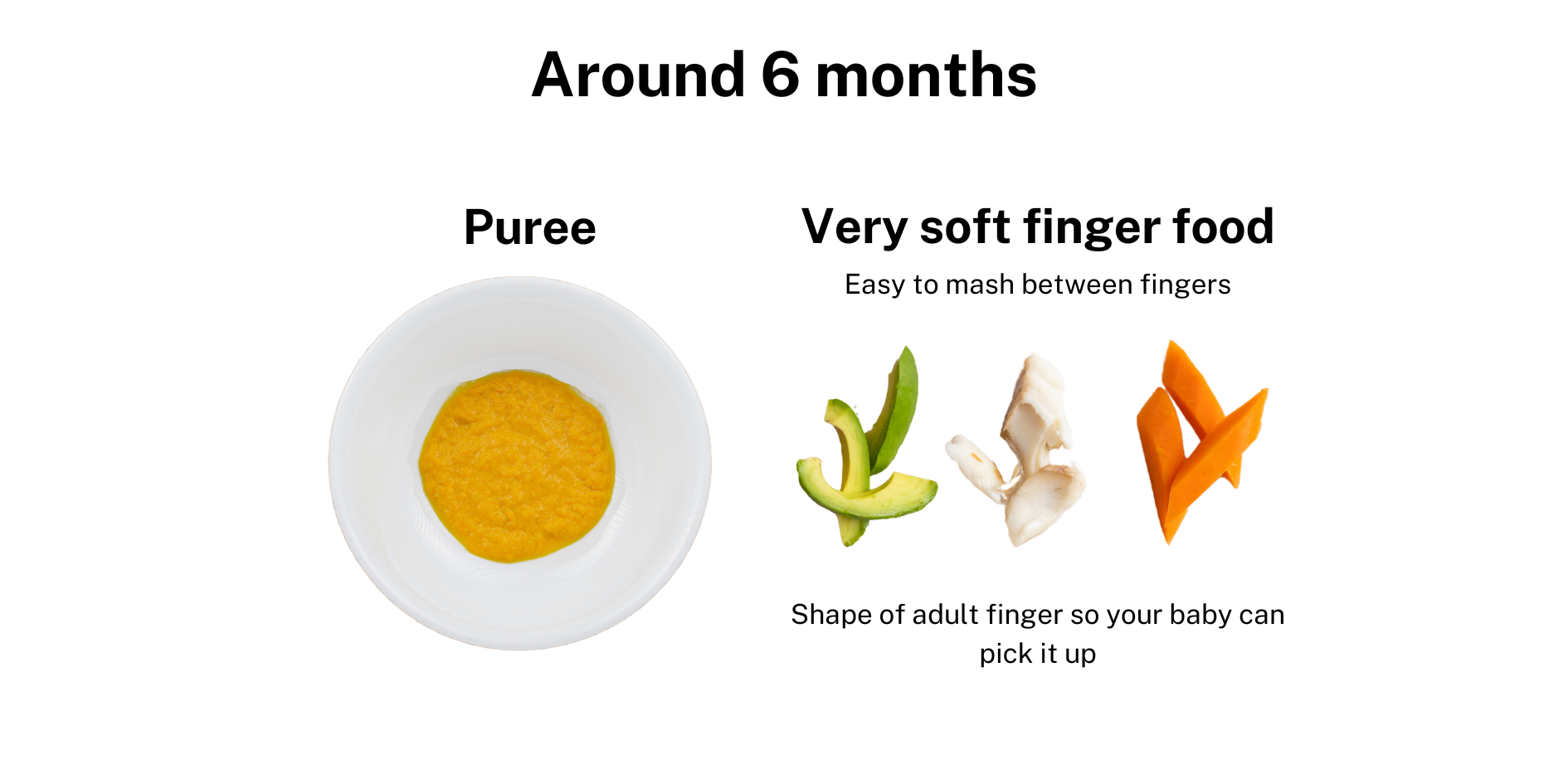
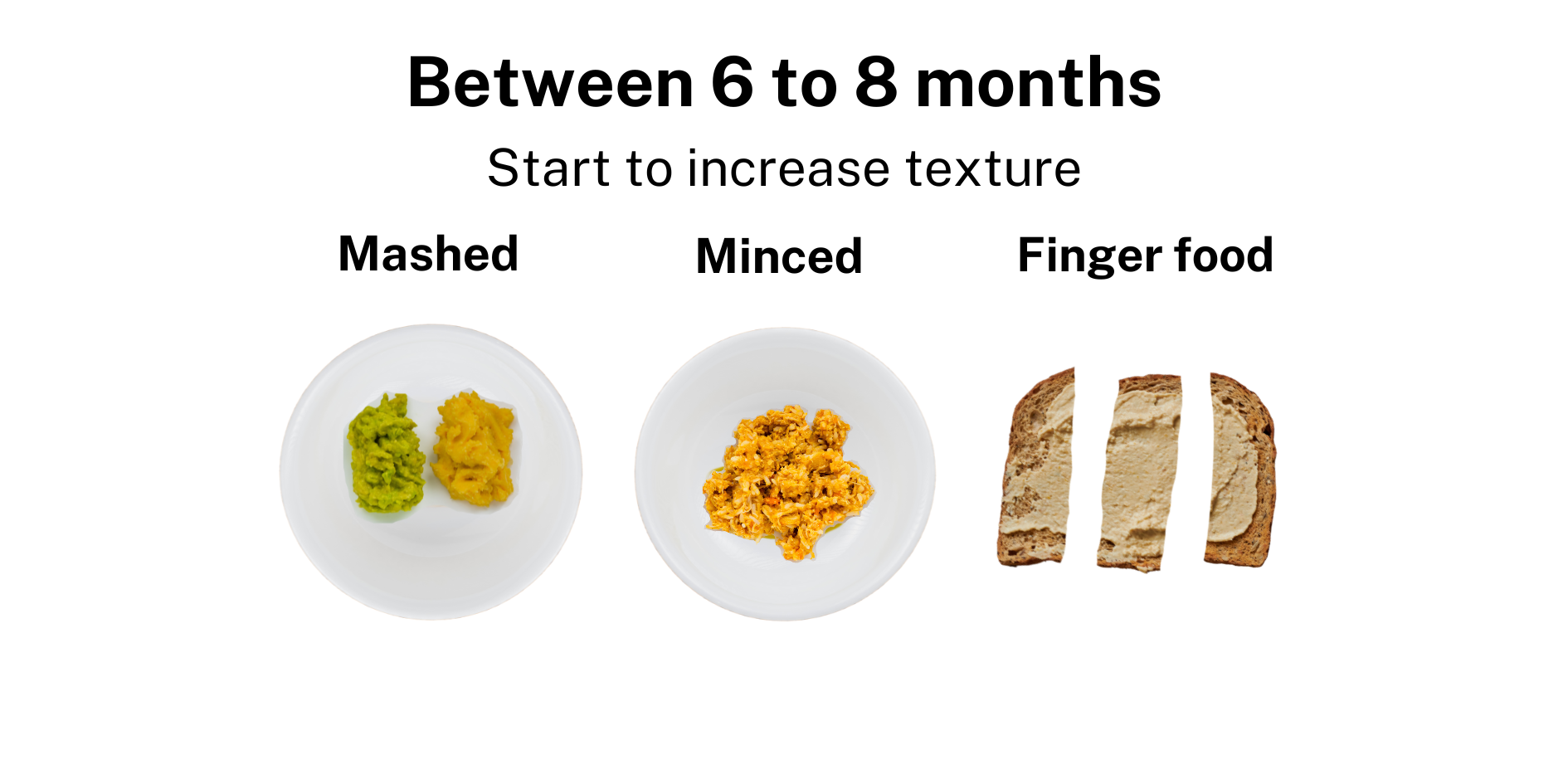
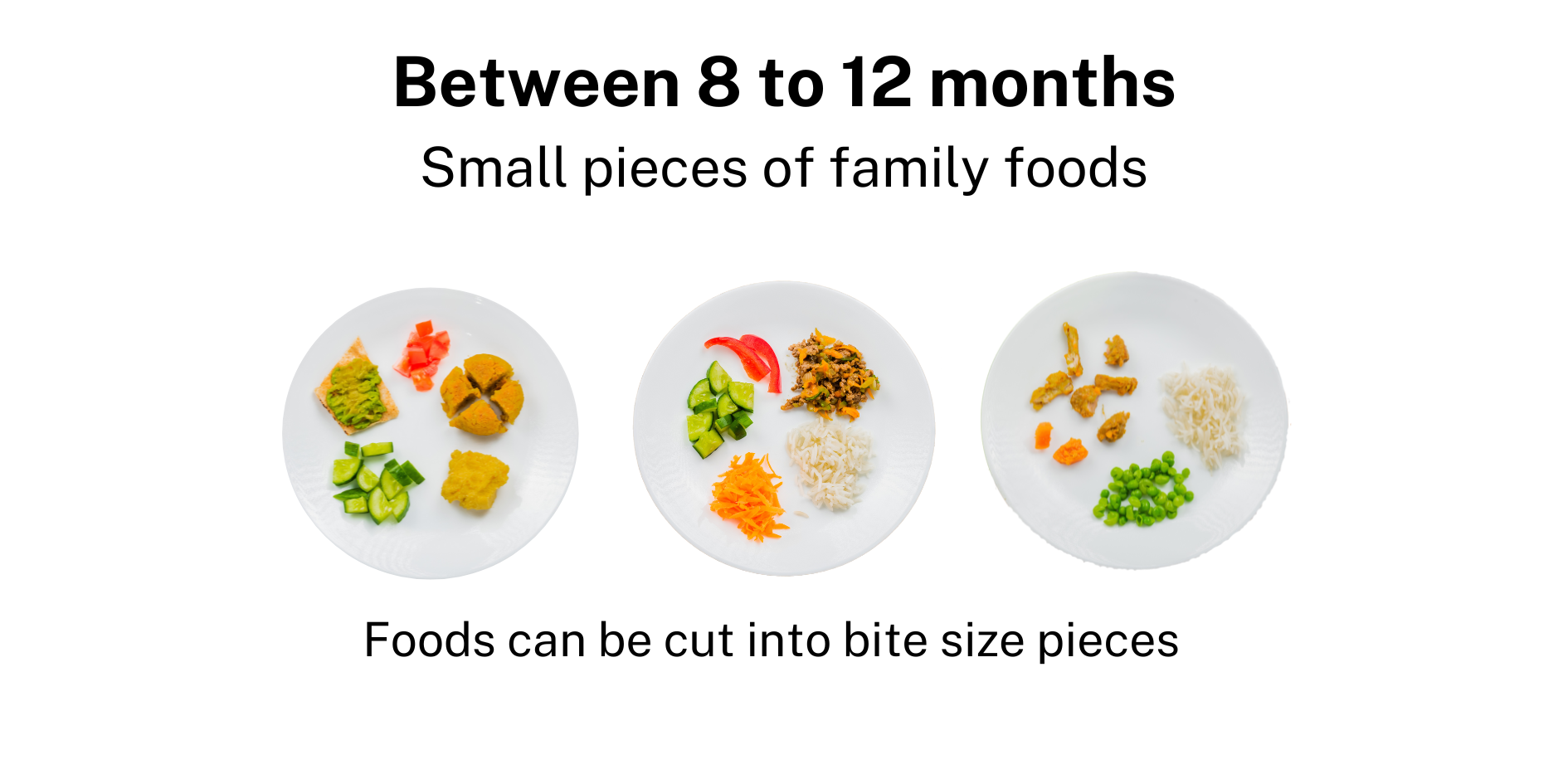
Foods and textures for different ages
Age | Type and texture of food |
Birth to around 6 months | Breast milk or formula. |
6 to 7 months | Finely mashed or pureed foods (no salt, sugar, fat or other flavours added). Very soft finger foods (food that is small enough for babies to pick up themselves) that can be easily squished with your fingers. |
8 to 12 months | Mashed, chopped or finger foods (no salt, sugar, fat or other flavours added). |
12+ months | Most foods eaten by the family. |
Milk
When you start giving your baby solid food, you may notice that they drink less milk throughout the day. This is normal because their growth slows down in the second half of the year.
If you are formula feeding, you can use the same formula until 12 months. The extra nutrition will come from foods, not different formulas or milk.
Eating meals as a family
Eating together is great for bonding and teaching good eating behaviours. When possible, eat meals like breakfast, lunch or dinner as a family, especially on weekends when you might have more time.
Remember, each baby's experience with food is different. If you have any questions, talk to your family doctor or child and family health nurse for more information.
Tips on how to prepare baby food
- Always wash your hands and your baby’s hands before eating or preparing food.
- Use a clean area for food preparation and clean utensils (such as forks, spoons and plates) for feeding.
- Test how hot the food is by tasting it with a clean spoon before feeding. Do not put a spoon that has been in your mouth into your baby’s mouth. Use a different clean spoon to feed your baby.
- Throw away any food that has been heated and not eaten by your baby.
What to avoid when preparing baby food
- Do not add salt, sugar or strong flavours to your baby’s food.
- Raw or uncooked eggs and foods containing raw eggs like home-made mayonnaise.
- Honey.
- High risk choking foods, like:
- lollies, chips and popcorn
- sausages and hot dogs
- whole nuts
- hard foods like raw apples
- round foods like whole grapes or cherry tomatoes
- fish with bones.